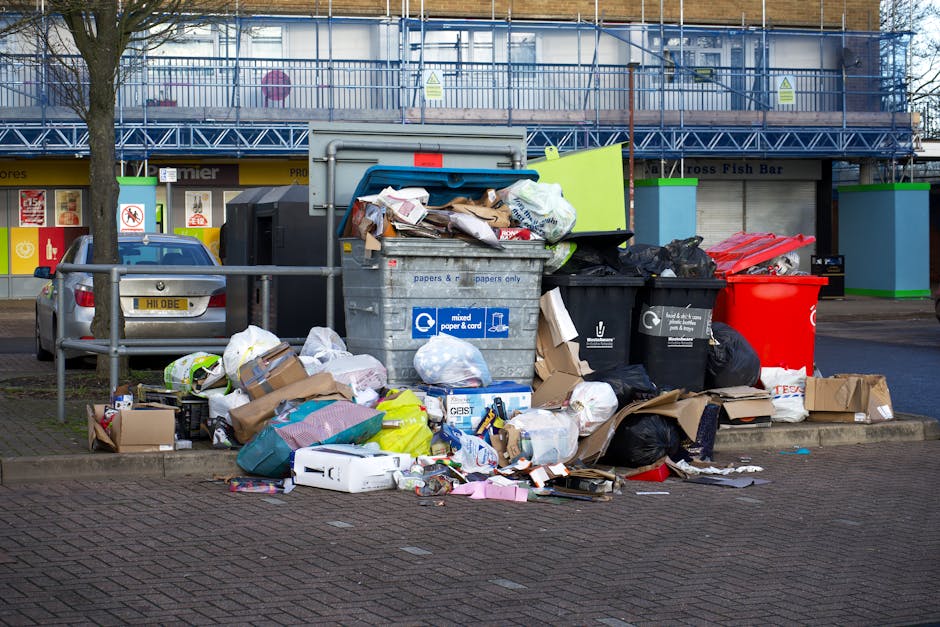
Private waste carriers vs council collections in Bromley
If you are weighing up Private waste carriers vs council collections in Bromley, you are probably trying to solve a very ordinary but slightly annoying problem: stuff needs to go, and it needs to go without chaos. Maybe it is a pile of broken furniture after a move. Maybe it is builders' rubble sitting in the garden. Or maybe the council collection slot feels too far away, and your hallway is starting to resemble a storage unit. Either way, the choice matters more than people think.
The right option depends on speed, volume, convenience, cost, and how much work you want to do yourself. In this guide, we will compare both routes clearly and honestly, so you can make a sensible decision for your home, flat, business, or one-off clear-out in Bromley. You will also find practical steps, compliance pointers, and a few real-world tips that save time and stress.
To make the most of a private clearance route, many people also look at related services such as house clearance, flat clearance, office clearance and general waste removal when the job is bigger than a standard bin day.
Table of Contents
- Why Private waste carriers vs council collections in Bromley Matters
- How Private waste carriers vs council collections in Bromley Works
- Key Benefits and Practical Advantages
- Who This Is For and When It Makes Sense
- Step-by-Step Guidance
- Expert Tips for Better Results
- Common Mistakes to Avoid
- Tools, Resources and Recommendations
- Law, Compliance, Standards, or Best Practice
- Options, Methods, or Comparison Table
- Case Study or Real-World Example
- Practical Checklist
- Conclusion
- Frequently Asked Questions
Why Private waste carriers vs council collections in Bromley Matters
This comparison matters because waste removal is not just about getting rid of clutter. It affects your schedule, your budget, your safety, and sometimes your compliance obligations. In Bromley, as in most parts of London, people often default to the council because it feels familiar and straightforward. But that is not always the most practical route, especially if you are dealing with a bulky load, a tight deadline, or a property that needs clearing before a move, sale, tenancy change, or renovation.
Council collections tend to work best for small, predictable jobs where you can wait for an available slot and follow the rules carefully. Private waste carriers, on the other hand, are built for flexibility. They can often collect at short notice, take mixed loads, and handle awkward items that are not easy to move down stairs, through narrow hallways, or out of a basement flat. Let's face it: not everyone has the time, van access, or patience to wrestle with an old wardrobe on a Sunday morning.
There is also a trust angle. Waste should go somewhere legitimate and traceable. The wrong choice can lead to fly-tipping risks, missed collections, or confusion over what can actually be taken. A good private carrier will be clear about what they remove, how it is handled, and what happens next. That reassurance is worth a lot when the job is messy or time-sensitive.
Practical takeaway: if your waste is small, routine, and you can wait, council collection may suit. If your waste is bulky, mixed, urgent, or awkward to move, a private carrier often makes more sense.
How Private waste carriers vs council collections in Bromley Works
The two systems are similar in purpose but very different in process.
Council collections
Council waste collection usually follows a set schedule or booking system. You place approved items out in the correct format, at the correct time, in the correct location. The big advantage is predictability if you only need a standard service. The drawback is that you must fit your needs into the council's timetable and rules, not the other way around. That is fine for a few black bags or perhaps a small bulky item. It is less convenient for a full garage clear-out or post-renovation waste.
There can also be practical constraints. Some items may need to be separated, dismantled, or presented in a specific way. If you miss the slot, you wait. If the item is not accepted, you start again. Not ideal when your spare room already has a chair, a lamp, and three boxes of who-knows-what stacked in the corner.
Private waste carriers
Private waste carriers typically offer booked collections that are arranged around your availability. They may provide a same-day or next-day option, depending on the job, and they often handle loading as part of the service. That is a major difference. You are not just paying for disposal; you are paying for labour, transport, and convenience too.
They are often used for home clearances, furniture disposal, garden waste, builders' waste, office waste, loft clear-outs, garage clearances, and general rubbish removal. A private provider may also give a more tailored service if you have fragile access, multiple floors, or several waste types in one go. For example, a mixed clear-out might include old chairs, broken shelving, a few bags of clutter, and some non-hazardous DIY waste. A council collection may split that into separate rules. A private carrier usually handles it in one coordinated visit.
If you are comparing pricing and service scope, it can help to review pricing and quotes alongside the actual clearance service you need, because the type of waste and the level of labour make a big difference.
Key Benefits and Practical Advantages
There is no single "best" option for everyone. The best choice is the one that fits the job cleanly. Still, each route has clear strengths.
Why people choose council collections
- They can be cost-effective for small, simple jobs.
- The process feels familiar and low-pressure.
- They may suit occasional household items that are easy to present correctly.
- They can work well when you are not in a hurry.
Why people choose private waste carriers
- They save time because collection is arranged around you.
- They often collect larger or mixed loads in one visit.
- They can handle lifting, loading, and awkward access.
- They are useful when deadlines are tight, such as moving day or end-of-tenancy work.
- They can be more practical for properties with limited storage or no off-street space.
One of the biggest advantages is reduced friction. You do not need to borrow a van, rope in a neighbour, or make three trips to a disposal site. And to be fair, once you have cleared a loft, a garage, or a full office, you tend to value your back a lot more than you did before.
For households planning a larger clear-out, related pages like home clearance, loft clearance, garage clearance and garden clearance show how a private carrier can be matched to the type of waste rather than forcing everything into one generic service.
Who This Is For and When It Makes Sense
This topic is especially relevant if you are in one of these situations:
- You are moving house or ending a tenancy and need a fast turnaround.
- You have bulky furniture that is hard to move alone.
- You are clearing a loft, garage, shed, or spare room full of mixed items.
- You are dealing with office furniture, archived materials, or relocation waste.
- You are renovating and have builders' waste piling up.
- You live in a flat or terrace where access is awkward and parking is limited.
- You want a one-off clearance rather than an ongoing collection schedule.
For a landlord, letting agent, or property manager, speed is often the deciding factor. A place needs to look presentable quickly, not after a long wait. For a homeowner, convenience may matter more. For a business, compliance and continuity are usually front and centre. The point is simple: the same solution does not suit everyone.
Private waste carriers also make sense if you want the removal done in one visit rather than turning it into a weekend project. That is especially true for awkward items like dismantled wardrobes, old office chairs, or heavy furniture that has seen better days.
Step-by-Step Guidance
If you are unsure how to decide, use this process. It is a fairly calm way to make a sensible choice without overthinking it.
- List exactly what needs removing. Separate furniture, general rubbish, garden waste, DIY debris, electronics, and anything potentially hazardous.
- Estimate the volume. A few items is one thing. Half a room of clutter is another.
- Check timing. Ask yourself whether you can wait for a council slot or need quicker removal.
- Review access. Consider stairs, lifts, parking, and whether items need dismantling.
- Compare the total effort. Factor in your own time, transport, and lifting, not just the collection fee.
- Confirm what is accepted. Not every service handles every item, especially when waste is mixed.
- Ask about traceability. Make sure the carrier can explain how the waste is managed and where it goes.
- Book the service that matches the actual job. Not the one that sounds cheapest on paper.
If you are dealing with a business clearance, the decision often becomes more specific. An office may need careful sequencing, minimal disruption, and secure handling of items. In that case, business waste removal is usually more relevant than a generic collection option.
Small aside, but useful: a quick walk through the property with a notepad can save a surprising amount of money. It sounds old-fashioned. It works, though.
Expert Tips for Better Results
Here are the habits that tend to produce better, cleaner outcomes.
1. Group waste by type before booking
This makes quoting easier and reduces the chance of delays on the day. Even a rough separation between furniture, rubble, green waste, and general rubbish helps a lot.
2. Take photos if you can
A few clear pictures can help a carrier judge loading time and vehicle space. It also reduces misunderstandings. No one likes the "oh, there was a bit more than we thought" moment when the van arrives.
3. Think about access, not just volume
Two bulky items on a top floor can take more effort than a whole heap sitting at the front door. Access matters. Always.
4. Ask what happens after collection
A trustworthy provider should be willing to explain how items are sorted, reused, recycled, or disposed of. If sustainability matters to you, it is worth asking.
You can also check a company's approach to recycling and sustainability if you want reassurance that reusable items are being handled thoughtfully rather than just tipped into the nearest lorry and forgotten.
5. Be realistic about your own time
If you would spend hours sorting, carrying, loading, driving, and unloading, the "cheaper" option may not be cheaper at all. Truth be told, sometimes the best value is the option that saves your Saturday.
Common Mistakes to Avoid
A few avoidable mistakes crop up again and again.
- Choosing only on headline price. Cheap can be expensive if it excludes loading, access issues, or mixed waste.
- Underestimating the volume. A room full of items usually takes longer than expected.
- Leaving it too late. If you need to move out or hand over keys, delays become stressful fast.
- Not checking item restrictions. Some materials need special handling or may not be accepted in standard collections.
- Forgetting about access. Narrow stairs, no lift, and parking restrictions can change the whole job.
- Assuming all carriers work the same way. They do not.
Another common slip is treating waste removal as a last-minute problem. Once you start sorting, you often discover more than one type of waste hiding in the same pile. That is normal. It just means the planning needs to be a bit more deliberate.
Tools, Resources and Recommendations
You do not need a toolkit the size of a shed, but a few simple things can help you make a better decision.
- Room-by-room notes: useful for clearances in homes, flats, lofts, and garages.
- Phone photos: help with quotes and access planning.
- Basic measuring tape: handy for bulky furniture and tight hallways.
- Bin bags or boxes: useful for sorting smaller items before collection.
- A rough timeline: especially important if you are moving, renovating, or closing a property.
It can also help to look at specific service pages depending on the type of waste you have. For example, furniture disposal is useful if the main issue is old sofas, beds, or cabinets. builders' waste clearance is more relevant for renovation debris. That kind of match-up usually produces better results than a one-size-fits-all approach.
If you want to understand the company's wider approach before booking, the about us page can be a sensible place to start, and the contact details page is useful if you want to talk through a more unusual job.
Law, Compliance, Standards, or Best Practice
Waste removal in the UK is not something to treat casually. Whether you use a council collection or a private carrier, good practice matters. The core idea is simple: waste should be handled safely, legally, and responsibly. You do not need to become an expert overnight, but you should know the basics.
For private carriers, best practice includes clear communication, transparent handling of loads, sensible PPE use, safe lifting, and an appropriate approach to recycling or disposal. If a company is vague about where waste goes or how it is managed, that is a warning sign. Not a dramatic one, just a practical one.
For customers, the main responsibility is to describe the waste accurately, avoid mixing in items that need special handling, and make sure the provider is suitable for the job. If you are clearing business premises, you should be especially careful about records, data-containing items, and items that need secure disposal.
It is also wise to check company policies where relevant. Pages such as health and safety policy, insurance and safety, terms and conditions and complaints procedure help signal whether the operator is organised and accountable.
One more small but important point: if you are arranging a clearance through a third party, ask a few plain-language questions. Who loads the items? What happens if access is trickier than expected? How are changes handled on the day? The best operators do not get flustered by those questions. They welcome them.
Options, Methods, or Comparison Table
Here is a straightforward comparison to help you weigh things up.
| Factor | Council Collections | Private Waste Carriers |
|---|---|---|
| Speed | Usually slower and slot-based | Often faster and more flexible |
| Convenience | You usually need to prepare items for collection | Loading and removal are typically handled for you |
| Best for | Small, routine, predictable jobs | Bulky, mixed, urgent, or awkward jobs |
| Access issues | May be harder to work around | Often better suited to stairs, flats, and limited parking |
| Cost structure | Can be lower for simple items | May cost more, but includes labour and flexibility |
| Waste variety | Often more restricted | Usually better for mixed loads |
| Best value | When the job is small and you can wait | When time, effort, and complexity matter |
In plain English: if your waste is light, simple, and non-urgent, the council route can be perfectly sensible. If the job has any real friction to it, a private carrier often becomes the better option very quickly.
Case Study or Real-World Example
Imagine a Bromley household clearing a spare room after a long-overdue sort-out. There is a broken bed frame, two shelves, a torn armchair, several bags of mixed clutter, and a small pile of garden waste that came in from the shed. On paper it does not sound dramatic. In the room, though, it is a different story. The items are bulky, the hallway is narrow, and the person doing the sorting works full time.
With a council collection, they may need to separate items, wait for an available slot, move everything into the right place, and then handle the rest themselves if some items are not accepted. That can be fine, but it takes time and patience.
With a private waste carrier, the job can often be handled in one booked visit. The team arrives, assesses access, removes the items, and leaves the room ready for cleaning or redecorating. That may sound simple, and that is the point. Sometimes the best service is the one that quietly removes friction from the day.
The same logic applies to business premises. If an office is being reconfigured or closed, a more tailored clearance approach may be needed. In those cases, a service like office clearance often makes more sense than trying to bend a council collection around desks, chairs, filing cabinets, and the general mess of a workplace move.
Practical Checklist
Use this checklist before you book anything.
- Have I listed every item that needs removing?
- Do I know whether the waste is mixed, bulky, or fragile?
- Do I need the job done quickly?
- Are there access issues such as stairs, lifts, or parking limits?
- Can I safely move the items myself, or is loading help needed?
- Do I need a one-off service rather than a recurring collection?
- Have I checked whether any items need special handling?
- Have I looked at relevant service pages for the type of waste involved?
- Do I understand the provider's terms, safety approach, and collection process?
- Have I asked for a clear quote before committing?
If you can answer most of those questions confidently, you are in a good place. If not, pause for ten minutes and work through them properly. It saves headaches later.
Get a free quote today and see how much you can save.
Conclusion
Choosing between private waste carriers and council collections in Bromley is really about matching the service to the job. Council collections can be perfectly adequate for small, ordinary, low-pressure waste removal. Private carriers tend to win when the load is larger, the access is awkward, the timeline is tight, or you simply want the whole thing handled without turning your day upside down.
There is no need to overcomplicate it. Look at volume, urgency, access, and effort. Then pick the option that fits your reality, not the one that merely looks cheapest for five seconds on a screen. That way, the job gets done properly and you can move on with your day, which is usually what people want in the first place.
And once the clutter is gone, the space often feels oddly lighter. Quieter, even. That's a good feeling.
Frequently Asked Questions
What is the main difference between private waste carriers and council collections in Bromley?
Council collections usually follow a fixed or semi-fixed system with rules about what can be presented and when. Private waste carriers offer a booked service that is generally more flexible, often including loading and removal from inside the property.
Are private waste carriers always more expensive?
Not always in the real-world sense. While the cash price may be higher than a simple council collection, private carriers can include labour, faster response times, and less disruption. For bulky or awkward waste, that extra convenience can be better value overall.
Which option is better for a large house clearance?
A private waste carrier is usually the more practical choice for a large house clearance because the volume, lifting, and time involved can be substantial. Council collections are more suited to smaller, simpler jobs.
Can I use a private carrier for mixed waste?
Often yes, provided the waste is non-hazardous and the provider accepts the materials involved. Mixed waste is one of the most common reasons people choose a private collection rather than trying to split items into multiple council bookings.
What should I ask before booking a waste carrier?
Ask what they collect, how access is handled, whether loading is included, what happens if the job is bigger than expected, and how waste is managed after collection. Clear answers are usually a good sign.
Is council collection better for small amounts of rubbish?
For small, routine, clearly defined waste, yes, council collection can be a sensible option. If you only have a few items and no urgency, it may be the simplest route.
What if I live in a flat with limited access?
That is often where private waste carriers become especially useful. Flats, upper floors, narrow staircases, and limited parking can make a standard council collection less convenient.
Do private waste carriers handle furniture removal?
Yes, many do. Furniture is one of the most common reasons people book a private collection, especially for sofas, wardrobes, beds, and other bulky items that are difficult to move alone.
How do I know if a waste carrier is trustworthy?
Look for clear communication, sensible policies, transparent pricing, and a straightforward explanation of how waste is handled. If the service feels vague or rushed in a bad way, trust your instinct.
Can I book waste removal for a business property in Bromley?
Yes. Businesses often need tailored waste removal for office moves, refurbishments, clear-outs, and routine disposal. In many cases, a service designed for commercial waste is more appropriate than a generic collection.
What type of waste is hardest to deal with?
Bulky furniture, mixed clutter, builders' waste, and items from upper floors are often the most awkward. Anything heavy, bulky, or time-sensitive tends to favour a private collection.
Is it worth paying more for convenience?
Sometimes, yes. If the alternative is multiple trips, time off work, or trying to lift awkward items yourself, the extra cost can be well worth it. Convenience is not a luxury when the job is urgent; it is often the whole point.
If you are ready to compare options properly, the next step is simple: review the type of waste, decide how much effort you want to spend, and choose the service that gives you the least hassle for the most sensible cost.