Office clearance in Bromley

Office clearance in Bromley needs to be handled with care, tidy planning and a clear understanding of what should be removed, retained, reused or recycled. We provide a commercial clearance service for workplaces that need desks, chairs, storage, filing items, general office contents and mixed business waste dealt with in an orderly way. The focus is on keeping the process practical for busy premises, so the work can be organised around the contents and layout rather than disrupting the whole site.
Whether you are updating a single suite, emptying a shared workspace or preparing a larger office for handover, the service is designed to deal with the contents in a structured way. Different items can need different handling: reusable furniture, small loose materials, archived paperwork, fixtures and mixed rubbish are not all approached in the same manner. That is why a proper clearance is more than a quick load-and-go job; it is a measured removal of the items that no longer need to stay on site.
For a straightforward start, send over the broad type of office clearance you need and the amount of material involved. If you already know whether the job is mainly furniture, general office contents or a fuller clearance, that helps us shape the work appropriately. A concise description of access and item types is usually enough to begin.
What office clearance can include
Office clearance usually covers a mixture of bulky furniture and everyday contents that build up over time in a working environment. Desks, meeting tables, task chairs, cabinets, shelving, pedestals and reception items are common examples, but the exact combination depends on the type of premises. Some jobs involve a single room, while others include several floors, storage areas or back-office spaces that have accumulated items over a longer period.
We can also deal with loose office contents that are no longer needed, such as obsolete accessories, small electrical items, packaging, display materials and general clutter created during reorganisations. Where a business is changing how its space is used, it may also need help with mixed clearances that include furniture and light waste together. In those cases, a well-planned removal helps prevent useful items being mixed in with unwanted material.
Useful jobs often begin with a simple decision about what is staying and what is leaving. If you want to prepare your own list before arranging the clearance, these points can help:
- identify furniture to retain, move or dispose of
- separate any paperwork or files that require review first
- note items that are fixed, awkward or may need extra handling
- flag access details such as stairs, lifts or loading points
- group any special items that should not be mixed with general waste
Furniture, fixtures and workspace contents
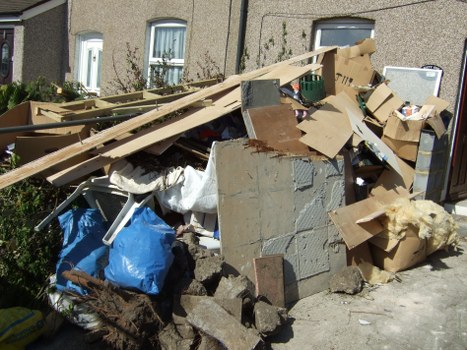
A large part of office clearance work is concerned with furniture and workspace contents that are difficult to move without proper handling. Desks and tables can be heavy or awkward, chairs may be stacked or scattered across rooms, and storage units often need emptying before removal. The clearance process is designed to remove these items in a practical sequence, reducing unnecessary handling and helping the job progress efficiently through the property.
Fixtures and fitted items need more care than freestanding contents, especially where they are attached to walls, partition areas or fitted storage. A careful approach matters because offices can include items that are not simply thrown away once removed. Some pieces may be suitable for reuse, some may be broken down for recycling, and others may need standard disposal. The right treatment depends on the material, condition and overall make-up of the item.
Important commercial choices often come down to three things: what must be removed, what may be reused and what needs to stay in place. Our approach is to keep those choices clear so the clearance matches the office rather than forcing the office to fit a one-size-fits-all pattern. In practice, that means dealing with the contents room by room when helpful, or taking a wider approach where the site layout makes that more efficient.
Business waste and mixed office materials
Office clearance is not limited to furniture alone. Many businesses also need support with mixed office waste that has built up alongside the furniture, especially after relocations, refurbishments or internal reorganisation. This can include packaging, outgrown stockroom items, damaged office supplies and other loose material that has no further use. When these items are removed alongside the main contents, the site can be cleared more cleanly and with less backtracking.
Business waste often appears in layers rather than as a single pile. Old folders, duplicate equipment, broken chairs, printer packaging and unwanted storage items may all sit together in the same room. A good clearance service deals with the practical reality of that mix without turning every item into the same category. It is still important to separate waste streams where sensible, because that supports more responsible handling of reusable and recyclable material.
When you are deciding how much of the site should be covered, it can help to think in terms of workspace function. A reception area, meeting room, filing zone and staff office may all need different treatment, even if they are cleared during the same visit. Matching the service to the actual use of the space helps make the clearance more useful at the point the job is completed.
Planning the clearance around your premises

Office clearances work best when the route through the premises is understood in advance. Corridors, lifts, stairwells, loading access and the position of bulky items can all affect how a job is approached. A clearance does not need to be complicated, but it does benefit from a sensible plan that reflects the size of the office, the amount of furniture present and any restrictions on moving items through the building.
Where access is straightforward, the emphasis may be on speed and orderly removal. Where the layout is tighter, the sequence becomes more important so that larger items leave first and smaller contents can follow without obstruction. This is one of the reasons office clearance is best treated as a practical project rather than a simple disposal task. The aim is to clear the area while keeping movement controlled and the remaining space manageable.
For a smooth quotation request, it helps to gather a few practical details first. You do not need a long inventory, but a short summary of the rooms involved, the main categories of items and any access issues can make the next step easier. If photographs are available, they can be useful, though they are not always essential. The key point is to describe the clearance in a way that reflects the site honestly.
Furniture disposal and recycling choices
Some office furniture can be redirected for reuse, while other items are only suitable for disposal. Office chairs, shelving, desks and storage units may vary widely in condition, and the right next step depends on age, damage and material type. A sensible clearance process does not assume every item has the same destination. Instead, it sorts the work so that reusable items are identified and waste is separated properly where possible.
Recycling is often most relevant where the office contains metal frames, wood-based furniture, plastics or mixed materials that can be processed once separated. Even when items cannot be reused, there may still be value in handling them in a way that supports responsible disposal. That is particularly important in larger clearances where one room can contain many similar items. Careful sorting avoids needless disposal of materials that could have been treated differently.
The furniture disposal side of the work is therefore not just about lifting bulky items out of the building. It is about choosing the right method for the contents, keeping the clearance controlled and leaving the office ready for its next stage. That balance between removal and sorting is what gives the service its practical value.
Contents removal during moves, refits and changes
Office clearances are often needed at times of change. A relocation can leave behind broken or surplus items, a refit can expose old furniture that no longer suits the layout, and a change of use may mean the whole office needs stripping out before other work can begin. The clearance service can be shaped around those stages so the property is left in a state that supports the next part of the project.
In many cases, the challenge is not just volume but timing. Businesses may need space cleared before decorators, installers or incoming occupants can work effectively. A structured clearance helps remove the obstruction first, which in turn makes it easier for follow-on work to happen without navigating around unwanted contents. That can be especially useful when the office includes both open-plan and enclosed rooms.
Clearances linked to refits often require decisions about what remains temporarily on site and what should leave immediately. Good coordination here saves wasted movement. If a room contains items that will be reused elsewhere in the premises, separating them early can avoid confusion later. It also helps keep the final cleared area aligned with the planned use of the building.
About Bromley
Bromley is a large town in southeast London and one of the principal centres of the London Borough of Bromley. Historically it developed from a rural settlement into a market town, and that heritage still shapes the centre today, where older streets sit alongside later retail and civic development. The town’s position on important transport routes helped its growth, particularly after the arrival of the railway in the nineteenth century, which strengthened links with central London and surrounding districts. Over time, Bromley became known for a strong commercial core as well as residential areas extending outward from the centre. Its townscape includes a mix of high street frontages, municipal buildings, Victorian and later housing, and substantial open spaces. Church architecture remains one of the most visible reminders of earlier settlement, while the modern shopping streets and office buildings reflect more recent change. One of the best-known parks in the borough is Crystal Palace Park, which lies to the west of the town and provides a significant area of open green space with historic landscape features and cultural associations. Further south, the borough includes countryside, woodland and smaller settlements that show how varied the wider district is. Bromley also has longstanding connections with performing arts, sport and local leisure life, giving it a character that blends suburban scale with active civic and cultural activity. The result is a place that is both busy and diverse, with a town centre that continues to serve shoppers, commuters and local businesses alongside surrounding neighbourhoods.
Practical points before the work begins

Before any office clearance starts, it helps to think about what needs to be left undisturbed. Confidential files, personal belongings, equipment still in use and any items earmarked for relocation should be separated in advance if possible. This does not need to become a lengthy exercise, but it does reduce the chance of confusion once the clearance is underway. A clear divide between retained and removed items makes the whole process more efficient.
The other practical matter is access. If the office is on an upper floor, has limited parking, or shares entrances with other occupiers, these details should be identified early. The same applies where items are stored in multiple rooms or where larger pieces have to pass through narrow corridors. Good access information makes it easier to set the work in the right order and avoid delays caused by unexpected obstacles.
When you are ready to move ahead, keep the enquiry focused on the main contents, the approximate scale of the job and any known restrictions. That gives a clearer basis for a quotation request and helps the clearance be planned around what is actually on site rather than around guesswork.
Supporting tidy handover of office space
Many office clearances are tied to the end of a lease, a change in tenancy or the preparation of a unit for inspection. In those situations, the main goal is often to leave the premises clear, orderly and ready for the next stage rather than to strip out every trace of use in the same way each time. The service can be tailored to that objective, dealing with the fittings and contents that no longer need to remain.
It is often helpful to think about handover in layers. First come the bulky items and general contents, then the loose materials, and finally any pieces that require a more careful decision because they may be reused, stored or reviewed elsewhere. This layered approach suits offices because the rooms are usually used for several purposes at once, and different categories of item may need different handling.
Where a premises contains a mix of furniture and general office waste, the most useful result is usually a clearance that leaves the space visually and physically reduced without taking shortcuts over sorting. That gives you a cleaner result at the end and helps the office move forward to whatever comes next.
Requesting a quotation
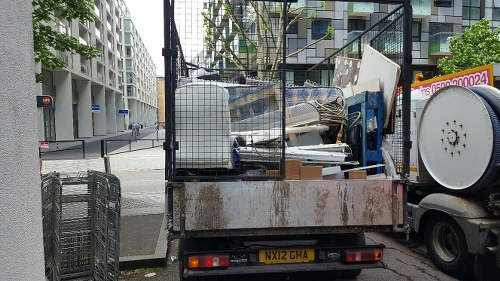
For a quotation, start with the basics: the location within Bromley, the kind of office contents involved, the approximate amount to be removed and any access considerations that might affect the work. If the clearance includes several rooms, a storage area or a mix of furniture and waste, say so plainly. A clear outline supports a more accurate response and reduces the need for assumptions later on.
If you are unsure how to describe the job, it is still worth sending a short summary rather than waiting until every item has been categorised. Office clearances often become clearer once the main groups are identified, and a practical description is usually enough to begin. Photographs can also help where the layout is awkward or the items are especially bulky, though a written summary remains useful either way.
Request a quotation today and outline the office clearance you need in Bromley. If you want the work arranged around furniture, mixed contents or a fuller clear-out, we can help shape the removal around the premises and its contents. Keep it simple, clear and specific so the next step is easier to organise.